
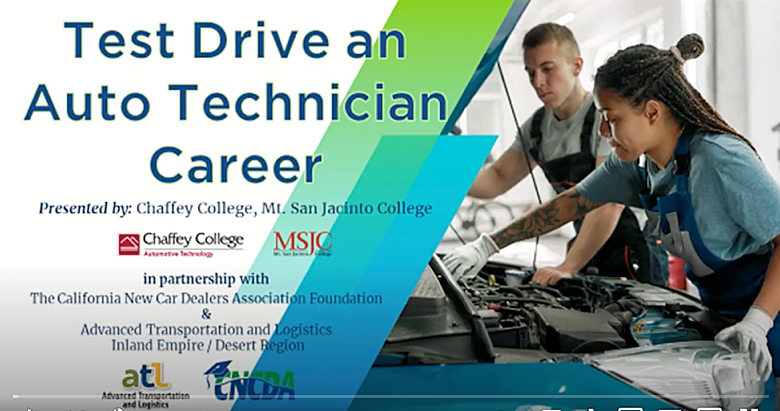
 Nearly 100 high school and community college students attended a webinar that provided a glimpse into what it’s like to work in the automotive industry and what skills are necessary to be successful in the field.
The “Test Drive an Automotive Tech Career” session was organized and conduct by a partnership between the automotive tech program at Chaffey College, the automotive apprenticeship program at Mt. San Jacinto College, the California New Car Dealers Association Foundation (CNCDA) and the ATL Regional Director in the Inland Empire/Desert Region. The idea for the program came from Jonathan Polidano, a faculty member at Chaffey College. Read More →
 As anyone who works in the automotive industry knows, not every car that a dealer purchases from an auction ends up for sale in the showroom.
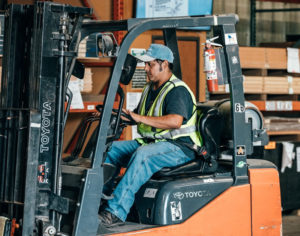 Inland Empire ATL Regional Director Larry McLaughlin recently spoke with students from Arroyo and Cajon High Schools about logistics career opportunities in Southern California and beyond as part of a project between Amazon and CSU San Bernardino to expand the region’s pool of logistics talent and build career pathways for students.
 Thanks to a team effort, the Orange County Automotive Pathway event was a resounding success, with some attendees saying it was more valuable than an in-person event would have been.
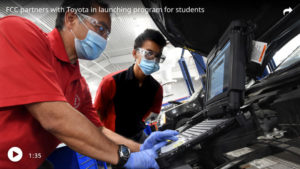 Sixteen Fresno City College automotive students are enrolled in a program that offers the highest training standards. The college is one of eight new locations for Toyota’s T-TEN program, which recently launched the Technical Education College Support (TCES) program.
 A report published last fall by the Mineta Transportation Institute at San Jose State University examines where the supply chain and logistics sectors fit within the “fourth industrial revolution” and how important digital skills will be in the sectors moving forward.
 The Federal Aviation Administration (FAA) is reminding everyone whose drone registrations expire in December that the
 The latest Boeing Pilot & Technician Outlook projects that 763,000 new civil aviation pilots, 739,000 new maintenance technicians and 903,000 new cabin crew members will be needed to fly and maintain the global fleet over the next 20 years.
 More than 800 people from California and beyond have attended the Mindful Mobility seminar series, organized by the Mobilize California Summit, Green Transportation Summit & Expo, and the West Coast Collaborative in place of in-person events scheduled for earlier this year.