Aviation Motorcycle Light Rail Automotive Railroad Advanced
Transportation
Electric Hybrid Hydrogen Fuel Cell Gaseous Fuels Alternative
Fuels
Energy Storage Microgrids Wind Generation Photovoltaic Biomass Technology Energy Efficiency Alternative
Energy
Drones Logistics
MENU
  • News
  • CECtinyCEC
  • Faculty
    • Login/Register
    • Close
  • Students
  • Legislators
  • Industry
    • Clean Cities Webinars
    • Close
  • Contact

Author Archive for leephillipsdesign – Page 25

Commercial UAV Expo Demonstrates Drones are Big Business

Posted by leephillipsdesign 
· October 26, 2016 

From Dronelife on October 21, 2016

Photo credit: DRONELIFE

Photo credit: DRONELIFE


In the world of drone conferences and shows, the Commercial UAV Expo stands out this year – demonstrating that businesses across sectors recognize that drones can be a valuable piece of their operating strategy. Read More →

Categories : News

Commercial Drone Companies: Making Drones an Integral Part of Industrial Practices

Posted by leephillipsdesign 
· October 26, 2016 

From Dronelife on October 20, 2016

Photo Credit: DRONELIFE

Photo Credit: DRONELIFE

Getting the General Public to Begin Thinking

It took a tease and a bold prediction from Amazon’s Jeff Bezos to get the general public to begin thinking a couple of years ago about the ways in which drones might change the business landscape forever. But commercial drone companies were already far ahead of the game by that time, taking the new technology beyond familiar military and hobbyist uses.
Bezos, of course, was focused on the idea of using the unmanned devices as couriers of a sort, an efficient and economical way to deliver packages for his retail behemoth. Meanwhile, others were on a different path, envisioning and actualizing a wide array of uses for drones across industries, and developing a wide range of business models to make drones an integral part of industrial practices. Read More →

Categories : News

Rio Hondo College and Professor John Frala Win Prestigious Clean Air Award

Posted by leephillipsdesign 
· October 5, 2016 

Frala and Rio Hondo to be honored at the 28th Annual Clean Air Awards in October

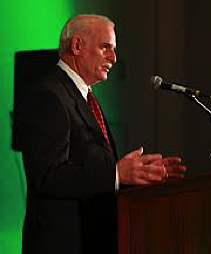
johnfralaProfessor John Frala and Rio Hondo College have been selected as joint winners of a South Coast Air Quality Management District Clean Air Award in the category of Clean Air Education and Outreach. This award honors visionaries in the region who made clean air contributions through innovation, leadership and exemplary service. Read More →
Categories : News

East Los Angeles College Students Compete in Shell Eco-marathon

Posted by leephillipsdesign 
· October 5, 2016 

Students travel to Detroit to showcase custom-built fuel efficient vehicles

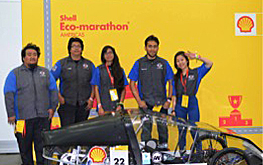
ecomarathon2East Los Angeles College (ELAC) auto tech students took on the challenge to innovate, design, build and test fuel efficient vehicles for the Shell Eco-marathon competition. Nearly 130 teams from high schools and top universities from North America traveled to Detroit, MI to showcase their custom-built cars designed to be extra-energy-efficient. Read More →

Categories : News

Students Taking Upper Division Automotive Courses at Rio Hondo College

Posted by leephillipsdesign 
· October 5, 2016 

The first semester of the college’s Bachelor of Science program is underway

upper-coursesRio Hondo College is one of 15 community colleges offering a four-year degree by the 2017-18 academic year. Rio Hondo now offers a Bachelor of Science in Automotive Technology with two pathways: Business & Marketing and Technical. Read More →

Categories : News

Miramar College Automotive Technology Program to Partner with Audi of America

Posted by leephillipsdesign 
· September 22, 2016 

Top trained technicians eligible to work at Audi dealerships nationwide

miramar-college-logoThe General Automotive Technology Program at San Diego Miramar College has entered into a partnership agreement with Audi of America to become part of the Audi Education Partnership (AEP). The AEP will assist the College in the training of technicians who will be able to diagnose and repair some the most advanced luxury vehicles on the market. Read More →
Categories : News

The New Solar Homes Partnership: Transforming California’s Housing Market

Posted by leephillipsdesign 
· September 22, 2016 

New Home Solar Penetration Rate Now More Than 20 Percent in California

From Renewable Energy World on July 20, 2016

Photo credit: Renewable Energy World

Photo credit: Renewable Energy World


The California Energy Commission’s New Solar Homes Partnership (NSHP) program is helping to make new homes in California environmentally friendly, while reducing energy bills. The program, a component of the comprehensive California Solar Initiative (CSI), provides financial incentives and other support to builders, developers, and homeowners to encourage the construction of new, energy-efficient solar homes. The NSHP, which was launched in 2007, has a 10-year goal of installing 360 megawatts (MW) of new residential solar photovoltaic (PV) capacity in California. It aims to have at least half of all new homes include solar by 2020. As of January 2016, the program has installed or reserved funds for 141.8 MW of solar capacity. It has already helped boost the new home solar penetration rate in the state from less than 1 percent to more than 20 percent.

Maximum Efficiency, Maximum Impact

The NSHP focuses on new home construction as a way to lower the upfront installation costs of solar energy systems by incorporating these systems seamlessly into the design of a building and installing the PV system while all the other construction activities of the home are underway. The NSHP requires that projects meet minimum energy efficiency levels, which maximizes the project’s impacts: environmental benefits, market development, and cost savings for homeowners.
The NSHP’s performance-based incentives are based on the expected annual generation of the PV system weighted by its time-of-use value to the utility system. This encourages high-quality installations with optimal designs. To avoid incentivizing oversized systems, NSHP incentives are limited to the first 7.5 kilowatts (kW) of a PV system. The NSHP also takes into account and offers higher incentives for qualified affordable housing projects and for installations on buildings that achieve higher levels of energy efficiency.
NSHP incentives decline over time as cumulative MW capacity targets are reached. By allowing performance-based incentives to decrease alongside declining solar hardware costs, the NSHP maximizes the total number of incentivized solar systems and encourages the industry to rely less on incentives as solar costs fall and the market matures.
The Energy Commission has worked to administer the program efficiently and cost-effectively. The NSHP program may be one of the few solar rebate programs in California, if not the only one, that spends 100 percent of funds on solar system purchases and installation rather than subtracting 10 or 15 percent for administrative costs.

Market Development and Transformation

The NSHP program fosters a housing market in which builders routinely construct highly energy efficient homes and install solar energy systems as a standard feature. According to the California Building Industry Association, several major homebuilders began offering developments with solar as a standard feature in 2012, and “most, if not all . . . relied on NSHP incentive funding, which has provided key financial support in making a variety of business models work.” The program’s success has paved the way for cities, such as Lancaster and Sebastopol, to require solar on all new homes.
Read original article here.

Categories : News

Pilot Energy Storage Project Installed at College of Marin

Posted by leephillipsdesign 
· September 22, 2016 

College Saves $150,000 a Year in Utility Costs

From Renewable Energy World on July 20, 2016

elon-musk-tesla-motors

Elon Musk, CEO of Tesla Motors Inc., unveils the company’s newest product, Powerpack. AP Photo — Ringo H.W. Chiu


In an effort to kick-start demand for its Powerpack energy storage solution, Tesla Energy is initiating pilot projects that demonstrate the value of energy storage to potential customers in the commercial space. One of the first of these pilots is a 4-MW storage project at California’s College of Marin.
It’s been more than a year since Elon Musk first announced the launch of Tesla Powerwall and Powerpack energy storage solutions. The daily-use residential Powerwall system has garnered most of the attention, with 2,500 of the 6.4-kilowatt-hour units sold worldwide in the first quarter of this year. Meanwhile, the commercial Powerpack system has moved more slowly out of the gate with fewer than 100 units sold worldwide in the first three months of the year. The 10-kilowatt-hour, 500-cycle Powerwall designed for backup use was discontinued in the U.S. market in March due to lack of interest.
The College of Marin demonstration project consists of a 2.4-MW system (five lithium-ion battery units delivering 480 kW of power each) on the college’s Kentfield campus and a 1.44 MW system (three 480 kW units) on its Indian Valley campus. The Kentfield system stores power generated by a carport and rooftop mounted PV system that was originally installed in 2008 to provide power for the campus’s lap pool and diving building. Tesla did not respond to inquiries regarding MWh capacity or cost per MWh for the Powerpack systems.

Substantial Savings in Utility Costs

After just a few weeks, the system is already paying dividends.

“Looking at last year’s bill, I can already tell the battery system is doing exactly what it’s supposed to be doing,” Greg Nelson, College of Marin’s Vice-President of Finance and College Operations, said. “It plateaued off the [demand] peaks, so when PG&E resets the rates for the upcoming year, they won’t be able to hit us for those peak demand charges. It’s going to save us about $150,000 a year in utility costs, which is not insignificant.”

For the college, the decision to install the Tesla storage system really was a no-brainer — the college’s financial contribution was zero. The cost of the $5.3 million project is being covered by $1 million in government incentives plus financial support from PG&E, Tesla, and MCE, California’s first Community Choice Aggregation agency. MCE brought Tesla and the college together under its mandate to grow local renewable energy generation and shrink demand through energy efficiency measures.
The College of Marin project faced logistical challenges — like snaking around the 900 geothermal wells the college uses for hot water — that contributed to the steep price tag. While a 35-year simple payback period might not be particularly compelling, Tesla is hoping potential commercial customers will be able to extrapolate the benefits of energy storage from the particulars at the College of Marin.

“For Tesla, it’s a huge win,” Nelson said. “I’ve probably had 30 companies here in the last month looking at the project because I’m the only battery storage facility in Northern California using their system.”

Read original article here.

Categories : News

DOT and FAA Finalize Rules for Small Unmanned Aircraft Systems

Posted by leephillipsdesign 
· September 22, 2016 

Rule Could Generate More Than $82 Billion for Economy; Create 100,000 New Jobs

From Federal Aviation Administration on June 21, 2016
droneWebsite1The Department of Transportation’s Federal Aviation Administration has finalized the first operational rules (PDF) for routine commercial use of small unmanned aircraft systems (UAS or “drones”), opening pathways towards fully integrating UAS into the nation’s airspace. These new regulations work to harness new innovations safely, to spur job growth, advance critical scientific research and save lives.

Economy Gets Boost in Revenue and Jobs

The new rule offers safety regulations for unmanned aircraft drones weighing less than 55 pounds that are conducting non-hobbyist operations. According to industry estimates, the rule could generate more than $82 billion for the U.S. economy and create more than 100,000 new jobs over the next 10 years.
The rule’s provisions are designed to minimize risks to other aircraft and people and property on the ground. The regulations require pilots to keep an unmanned aircraft within visual line of sight. Operations are allowed during daylight and during twilight if the drone has anti-collision lights. The new regulations also address height and speed restrictions and other operational limits, such as prohibiting flights over unprotected people on the ground who aren’t directly participating in the UAS operation.
The FAA is offering a process to waive some restrictions if an operator proves the proposed flight will be conducted safely under a waiver. The FAA will make an online portal available to apply for these waivers in the months ahead.

“With this new rule, we are taking a careful and deliberate approach that balances the need to deploy this new technology with the FAA’s mission to protect public safety,” said FAA Administrator Michael Huerta. “But this is just our first step. We’re already working on additional rules that will expand the range of operations.”

Training Requirements

Under the final rule, the person flying a drone must be at least 16 years old and have a remote pilot certificate with a small UAS rating, or be directly supervised by someone with such a certificate. To qualify for a remote pilot certificate, an individual must either pass an initial aeronautical knowledge test at an FAA-approved knowledge testing center or have an existing non-student Part 61 pilot certificate. If qualifying under the latter provision, a pilot must have completed a flight review in the previous 24 months and must take a UAS online training course provided by the FAA. The TSA will conduct a security background check of all remote pilot applications prior to issuance of a certificate.
As part of a privacy education campaign, the agency will provide all drone users with recommended privacy guidelines as part of the UAS registration process and through the FAA’s B4UFly mobile app. The FAA also will educate all commercial drone pilots on privacy during their pilot certification process; and will issue new guidance to local and state governments on drone privacy issues.
Read complete press release here.

Categories : News

SUGAR Volt: Boeing’s Hybrid Electric Aircraft

Posted by leephillipsdesign 
· July 25, 2016 
· No Comments

SUGAR Volt2Link

No Comments
Categories : News
« Previous Page
Next Page »
Advanced Transportation and Logistics
Copyright © 2026 All Rights Reserved
WCAG 2.0, ATAG 2.0, ADA, & Section 508 Accessibility by UserWay.
Click on Icon in upper right corner or type CTRL+U.
